


Who Am I Without A Business Card? The Identity Shift
"So, what do you do?"
Three weeks after leaving my 25-year career in luxury hospitality, I froze at this simple question. According to Harvard Business School research, I'm far from alone—the retirement identity crisis is one of the most profound psychological challenges that nobody talks about.
In this episode of Casual Mondays, we explore why losing your professional identity hits so hard (even if you were ready to leave), and I share 7 research-backed strategies for navigating the transition successfully.
Whether you're already retired and struggling with "who am I now?"—or still working but worried about this shift—this episode gives you the frameworks and permission you need to build a richer sense of self on the other side.


Who Am I Without My Business Card? Navigating the Retirement Identity Crisis
For years, your professional role provided:
- Instant social recognition ("Oh, you're a surgeon? Impressive!")
- Clear measures of success (promotions, bonuses, titles)
- Structured identity ("I'm a teacher," "I'm an engineer")
- Built-in purpose (projects, deadlines, deliverables)
When that scaffolding disappears, even the most self-assured people feel unmoored.
Traditional retirement at 65 comes with social scripts. People understand it. Expect it. Celebrate it.
Early retirement at 50? Society doesn't quite know what to do with you yet. You're too young for "retired" to feel comfortable. Too established to pivot to something entirely new. And the typical response—"Must be nice!" or "What do you DO all day?"—can feel more like interrogation than celebration.
Stanford Center on Longevity researchers found that people who retire before 60 face unique psychological challenges as they navigate uncharted social terrain. There's no roadmap. No cultural consensus. No clear answer to "What comes next?"
Join the Conversation
Website: www.casualmondayspodcast.com
Instagram: @casualmondayspodcast
YouTube: Casual Mondays Podcast
Casual Mondays Club: https://www.casualmondayspodcast.com/newsletter/
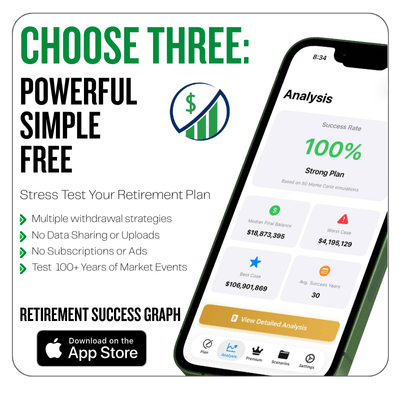
Stress-Test Your Retirement Plan with the Retirement Success Graph App
Powerful. Secure. Free. Stress test your retirement plan against 100+ years of market data with the Retirement Success Graph app.
Click to Download
Primary Research Citations:
- American Psychological Association – Retirement transition and identity research
- Harvard Business School – Executive identity post-retirement studies
- Stanford Center on Longevity – "Phoenix Career" methodology and generativity research
- University of Michigan Health and Retirement Study – Psychological adjustment data
- Dr. Nancy Schlossberg, University of Maryland – Transition theory research
Additional Resources:
- Book: Retire Retirement by Tamara Erickson (Harvard Business Review)
- Study: "Positive Retirement" Journal of Vocational Behavior, 2023
- AARP Foundation research on social identity in later life
Episode Links:
Casual Mondays Podcast: casualmondayspodcast.com
Retirement Success App: retirementsuccessapp.com
CHAPTERS
GREAT BIG DISCLAIMER:
The Casual Mondays Podcast is presented only for entertainment and/or educational purposes. Moreover, no listener/user should assume that any such discussion serves as the receipt of, or a substitute for, personalized advice from a registered investment professional. We do not make any representations or warranties as to the accuracy, timeliness, suitability, completeness, or relevance of any information presented on the podcast, this website, or other affiliated properties. Any third-party content or links are provided solely for convenience. Neither Kevin Donahue nor the Casual Mondays Podcast is a registered investment advisory firm, a law firm, or a tax advisory service, and neither is representing any spoken, written, or transmitted content as financial planning, tax, legal, or investment advice. All users are strongly advised to consult qualified professionals regarding any financial planning, tax, legal, or investment decisions.
Kevin Donahue (00:02)
I was standing at an event meeting people with my wife a few weeks after leaving my career in hospitality. Simple question, right? I'd answered it thousands of times at conferences, networking events, client dinners, but this time I froze. Well, I guess I'm retired now. I guess. 25 years of building luxury brands and...
leading teams and suddenly I was answering the most basic social questions like it was my first day of freshman orientation. If you felt that moment or you're worried your will, you're in the right place.
Welcome to Casual Mondays, the podcast where we're trading our desk for a deck chair. I'm Kevin Donahue. Before we begin, welcome to the podcast. As a recent retiree, I'm excited for us to build our community, share stories and to discuss the good, bad, and all of the in-between of retirement to help each other and those who are working towards their next chapter.
Today we're diving into one of the most profound and least discussed challenges of early retirement. Who are you when you're no longer the title on your business card?
Let's start with a confession. Before I retired, I thought the hardest part would be the finances. Would the numbers work? Right? Could I afford the lifestyle that we've had? I had spreadsheets, Monte Carlo models, apps, meetings with financial planners. You know what I didn't prepare for? The psychological whiplash of
suddenly being no one in particular. And I'm not alone. According to research from the Harvard Business School, even executives who insist their work is just what they do, not who they are, you know those guys, they experience significant identity disruption in retirement. It turns out after decades of your profession being
conversational shorthand for your entire life story that identity becomes more deeply embedded than most of us ever realize. Think about it for 30 years when someone asked you what do you do at a dinner party your job title answered so much more than the literal question it communicated your
education, ⁓ your socioeconomic status, your daily rhythm, your place in society.
I'm a surgeon and all of the unspoken aspects of the role. Smart, successful, saves lives. I run a tech startup, innovator, risk taker, building the future. I'm the market director for a luxury resort brand. That was me. Creative, leadership, lots of interesting clients. And now
I'm retired. And suddenly you're watching people's faces trying to figure out how old are you? Are you rich or did you get laid off? And frankly, whether this conversation just became less interesting.
Here's what the American Psychological Association research tells us. This identity disruption isn't a sign of weakness or excessive attachment to work. It's an absolutely normal psychological response to losing what researchers call a master identity. A role so central to your self-concept that it organizes how you think about everything else. But here's the good news.
That disruption, it's temporary. And there are research-backed for moving through it faster and emerging with an even richer sense of self. That's what today's episode is all about.
Before we get to solutions, let's spend a minute understanding why this identity shift hit so hard, even for people who are genuinely ready to leave their careers. Dr. Nancy Schlossberg at the University of Maryland, shout out to Nancy, has spent decades studying life transitions. Her research identifies something she calls role exit. And this is what got me very involved in this concept.
It's the process of disengaging from a role that has been central to your identity, just like at retirement. What makes it particularly challenging is that it's not just one transition. It's actually several happening simultaneously. First, the loss of your structured time, right? Your meeting calendar was full, your deadlines, your travel, your projects, even if you complained about
That structure helped form a sense of purpose and forward momentum. Second, there's the loss of the social identity. Work gave you a tribe, colleagues who understood your language, knew your world, shared your challenges. Retirement often means that you're leaving that community behind. Third, and this one surprised me, there's the loss of
valued affirmation. At work, you got regular feedback, close a deal, everybody celebrates, solve a problem, hey, let's go ⁓ out for a drink, complete a project recognition from the boss. That steady stream of validation is easy to take for granted until that entire system is gone.
And fourth, there's what Stanford's Center on Longevity calls narrative disruption. Your career told a story where you came from, what you built, where you were headed. Retirement can feel like the book that just stopped mid chapter.
Now, I want to be careful here. I'm not saying retirement is all loss, not by a long shot. Okay. We'll get to the gains in a minute, but I think we do ourselves a disservice when we pretend that this transition is just celebration. Because here's what happens when we don't acknowledge what is actually grief.
It comes out sideways. ⁓ depression rates spike in the first year of retirement. Marital satisfaction often dips. Some people rush into ill fitting encore careers just to recapture that sense of purpose only to find themselves burned out all over again.
So the research is clear. People who acknowledge the losses, give themselves permission to grieve the identity they're leaving behind, actually adjust better than the people who just try to power through.
So if you're feeling a little lost right now, I want you to know I'm right there with you. As a newly retired person, understand that's not a sign that you made a bad decision. It's a sign that you're human and that you're exactly where you're supposed to be mentally and emotionally.
We're about to get into seven research-backed for navigating the identity shift. But first, a few housekeeping notes. Once again, first and foremost, thank you for streaming the podcast. Please click a five-star rating in your podcast app so that others who are planning their next chapter can find our show. There's really nothing that can help our show grow more than
giving a podcast review. So thank you so much. Also, you'll find all of the links to our discussions, the books I've referenced any websites from today's episode in the show notes on your podcast app. If you can't find them or you want a different way to share them with someone. I'll also post them on our homepage at casual Mondays podcast.com. Lastly, I would love
to hear from you and to get you involved in the show. Go to casualmondayspodcast.com, join our Casual Mondays Club. That's where you'll find more discussion, some stories that aren't on the podcast, and links in your email about once a month. If you want to share your story, you can click Record a Voicemail on our website. It's incredibly easy, even I can do it.
casualmondays.com click record a voicemail. You can do it on your phone, your tablet, your computer. We'd love to hear your stories, ⁓ your show feedback, questions and suggestions. As a token of thanks for leaving a voicemail, we will also provide you with a lifetime premium code for the retirement success graph app on iOS.
⁓ This is an app that I wrote to bring analyst level analysis to your phone without having to surrender your data or pay an annual subscription. The Apple stress test your retirement plan against 100 years of US market data, score your plan and give you simple suggestions for improvement. Retirement success graph is the name. It is free on the Apple App Store.
And just for leaving a voicemail, we'll give you a lifetime premium code worth $5 to every one of you who drops a voicemail on the website. All right, that's it for housekeeping. Let's get back to our topic. What I'm about to share comes from a synthesis of research across multiple institutions. The Harvard Business School, I mentioned previously Stanford Center on Longevity.
University of Michigan Health and Retirement Study, and Dr. Schlossberg's Transition Theory work. I tried to organize it into seven practical strategies, and I'll share a real example for each.
Strategy one, expand your personal identity before you leave work. This is for those of you still in the workforce, obviously, but you know, if you're planning your exit, the research shows that people who cultivate non work interest before retirement have a significantly smoother transition. I met a woman last year, let's call her Janet, who spent her final three years working intentionally building her after.
identity. She had joined a ceramics studio, she had taken a leadership role at her church and she became a regular at a running club. And by the time she retired, she had ready made communities waiting to celebrate with her. Her advice was start investing in your future self while you still have the structure of work to support your transition.
Strategy two, recognize the continuity between your past and present selves. Here's an insight that actually changed my perspective. Retirement doesn't erase who you are, right? The skills, values, and interests that made you successful on the job don't simply disappear. They just need new outlets.
One retired marketing executive that I spoke with realized that what she actually loved about her work wasn't marketing per se, it was storytelling. It was persuasion. In retirement, she channeled those same skills into grant writing for nonprofits she cared about. Different context, same core strength. Ask yourself, what was I really doing in my career, not my title?
But what were the underlying skills and values? Those transfer.
Strategy three, re-channel your professional skills towards new missions. This builds a bit on strategy two. Michael was a mechanical engineer for 35 years. After retirement, he started ⁓ volunteering with Engineers Without Borders, helping design water systems for developing countries. He was still doing engineering, solving technical problems, applying expertise, managing systems.
but now for a cause that lit them up in a way that corporate projects never had. Same skills, deeper meaning.
Strategy four, find new sources for value affirmation.
Strategy four, find new sources for valued affirmation. Let's be honest, recognition feels good. If you're someone who feeds off it, it feels great. When that steady stream of workplace validation disappears, you might start feeling invisible. The solution isn't to pretend you don't need affirmation, it's to find new sources.
One woman who'd spent her career mentoring junior colleagues started volunteering as a business mentor through SCORE after retirement. Different contexts, same sense of being valued for her expertise.
Strategy five, put a material stake in the ground. Sometimes we need something tangible to anchor our new identity. ⁓ I'm looking at me here. Someone who decided that a lot of the things I'm passionate about, like the lady I mentioned before in storytelling, manifests itself through these podcasts.
And so my opportunity to have something concrete to point to something real is to pour myself into the casual Monday's podcast.
Strategy six, maintain valued relationships in new context. Work relationships often suffer when you retire, but they don't have to disappear entirely. Those text groups that you have, the chats, the ⁓ going out to work after hours, the going to lunch together, that is important. And those relationships can evolve, but they don't have to end.
Research from Harvard's famous study of adult development confirms what we know, meaningful relationships are the single strongest predictor of wellbeing later in life. So protect the relationships that matter.
And strategy seven, bridge through teaching or mentoring. If you've spent decades building expertise, retirement doesn't mean that expertise becomes worthless. means you might have new ways to share it. Some people do this formally. I have made a decision to join an advisory board at the local university. Others do it informally.
mentoring young entrepreneurs or volunteering with nonprofits or simply being more intentional about sharing knowledge with neighbors or family members.
Now here's what I want you to notice about all seven strategies. None of them require you to reinvent yourself. It's not about becoming a different person. They're about recognizing that you were always multifaceted and your professional identity was just one facet of who you are. Think about it like this.
When your entire sense of self was tied to one professional role, you were putting all of your identity eggs in one basket. Identity bridging is about creating multiple baskets so that if one thing in your life changes, you're not left feeling completely lost.
All right, let's bring it home. We've covered a lot of ground today. We've talked about why the identity shift happens, why it hits us so hard and talk through briefly seven research back strategies for navigating it successfully. So let's make it real. Here's your action plan. First, give yourself permission to feel whatever you're feeling about this transition.
Confused? Normal. Excited? Great. Scared? Makes total sense. Remember what the research shows. People who acknowledge and work through these feelings adjust better than the people who try to power through.
Second, start what I call identity archeology. Grab a notebook and dig into your past. What did you love doing before your career took over? What activities made you lose track of time? What aspects of your work did you find most meaningful? And how might you find those same elements in other contexts? Don't overthink it, just start making lists.
hobbies you used to have, causes you care about, skills you've developed that might transfer, people you admire, places you love to spend time. Start having what Stanford's researchers call generative conversations. Talk to people about what you're going through, not necessarily for advice, though that might come, but to help you process your thoughts and discover new possibilities. Set a goal.
One meaningful conversation a week with someone about life after career. It might be other retirees, people who've made transitions, or people who seem to have found meaning outside of traditional work.
Finally, start experimenting. Identity isn't something you think your way into. It's something you act your way into. Try things, join groups, volunteer, take classes, take a chance. Some will stick, some won't. That's the process. The goal isn't to figure out your next chapter all at once. It's to start exploring with curiosity instead of anxiety.
Here's what I want you to take away from today's episode. You are not just your business card. You never were. Yes, your career was significant. It shaped you, challenged you, gave you purpose and community and identity. Honoring that, even grieving it a little is appropriate, but you are so much more than your title and the person you're becoming.
They're not less than the person you were. They're just different, more expansive, freer. The identity shift is real. It's challenging. And it's also an invitation to discover parts of yourself that got buried under decades of professional demands to build new connections, find new meaning in unexpected places.
That's not a crisis. That's an adventure.
In our next episode, creating structure without the nine to five, how to build daily routines that provide purpose and accomplishment without the rigid structure. We'll talk about anchor commitments, peak energy blocks, and why the first 90 days of retirement might be the most important. Until then, here's your assignment. Start your identity archeology.
Get the notebook, write down three things you love doing before your career to defined you and ask yourself, is there room for any of those three things in your Mondays Now?
I'm Kevin Donahue and this is the Casual Mondays Podcast. Welcome to your next chapter.