What Do You Want to Be Remembered For When the Business Card No Longer Matters?
Your professional legacy is written. The deals closed, the teams built, the projects delivered—all documented in LinkedIn profiles and performance reviews that nobody will read in twenty years.
That chapter is complete. Now comes the harder question: what legacy are you building that actually matters?
Not the professional accomplishments that impressed colleagues. Not the title that commanded respect in conference rooms. But the mark you leave on people who matter, causes you care about, and the world you're part of.
Your career legacy was externally defined and easily measured: revenue generated, promotions earned, people managed. Your retirement legacy is internally defined and harder to quantify: lives touched, wisdom shared, difference made.
The transition from professional achievement to meaningful impact is one of retirement's most profound challenges—and opportunities.
Legacy as Monument vs. Legacy as Moments
When people think about "legacy," they often envision something grand: foundations established, buildings named, substantial charitable contributions. The monument mentality—leaving something big enough that your name endures.
This creates problems for most retirees. You're not a billionaire philanthropist. You won't have a hospital wing named after you. You can't endow university chairs or establish substantial foundations.
If that's the legacy definition, you'll feel inadequate.
But research from the Stanford Center on Longevity on generativity in later life reveals a different framework: legacy as accumulated moments rather than singular monuments.
Monument legacy: Grand, visible, name-attached, requires substantial resources, benefits strangers broadly.
Moments legacy: Small, personal, relationship-based, requires presence and attention, benefits specific people deeply.
Most people are remembered not for monuments but for moments:
- The mentor who believed in you when nobody else did
- The grandparent who taught you specific skills or values
- The friend who showed up during your hardest time
- The stranger whose kindness changed your trajectory
These moments create legacy that endures through generations—not because your name is on a building but because your influence shaped someone who shapes others.
The Four Dimensions of Meaningful Legacy
If legacy isn't primarily about monuments or wealth transfer, what is it about? Four dimensions emerge from research on meaning and purpose in aging:
Dimension 1: Wisdom Transfer
You've accumulated decades of knowledge, judgment, perspective. This expertise doesn't expire when you retire—but it evaporates if not shared.
Wisdom transfer happens through:
- Formal mentoring: Structured programs connecting experienced professionals with emerging ones. Many industries have mentor networks specifically for retirees.
- Informal guidance: Being available to former colleagues, industry contacts, or community members who seek advice.
- Teaching: Community colleges, workshops, online courses—sharing expertise through structured education.
- Writing: Blogs, books, articles—documenting what you've learned so others can benefit without direct contact.
The Corporation for National and Community Service research on volunteering impact shows that skilled mentoring provides some of the highest value contribution retirees can make—your experience becomes someone else's advantage.
Dimension 2: Relationship Investment
Professional life often meant sacrificing relationship depth for career advancement. You were present but distracted. Available but preoccupied. Loving but exhausted.
Retirement provides opportunity to invest in relationships that matter:
- Grandchildren: Not just occasional visits but genuine presence in their lives—teaching skills, sharing stories, providing stability.
- Adult children: Transitioning from parental authority to peer friendship while remaining supportive resource.
- Spouse/partner: Deepening connection after years of parallel rather than integrated lives.
- Friendships: Finally having bandwidth for relationships that career years marginalized.
These investments don't generate impressive announcements. But they create the legacy that actually matters to people who know you—the difference between "my grandfather existed" and "my grandfather shaped who I am."
Dimension 3: Cause Contribution
Beyond personal relationships, meaningful legacy often involves contributing to causes larger than yourself:
- Environmental conservation
- Education access
- Health research
- Community development
- Arts and culture
- Social justice
- Whatever aligns with your values
This doesn't require wealth—it requires strategic application of your time, expertise, networks, and advocacy.
Research from the American Psychological Association on meaning and purpose in aging shows that contribution to causes beyond self predicts higher life satisfaction and sense of purpose than purely self-focused activities.
Dimension 4: Values Embodiment
The most enduring legacy is living in ways that embody values you want associated with your name:
- Integrity: Making ethical choices even when inconvenient
- Generosity: Sharing resources without keeping score
- Courage: Taking stands that matter despite social cost
- Growth: Continuing to learn, adapt, change rather than calcifying
- Presence: Being genuinely available to people who need you
You're remembered less for what you accomplished than for who you were. The values you demonstrated daily create legacy more lasting than any single achievement.
Mentorship: The Multiplier Effect
Of all legacy activities, mentorship may provide the greatest impact-per-hour-invested.
Your career taught you countless lessons—most learned through painful mistakes. Mentoring allows someone else to benefit from your hard-won wisdom without repeating your failures.
Effective mentorship requires:
Genuine investment: Not transactional advice-giving but real relationship where you care about mentee's success beyond how it reflects on you.
Listening over telling: Mentorship isn't lecturing. It's asking questions, understanding context, helping mentee discover their own answers with your guidance.
Appropriate boundaries: Being available without becoming crutch. Challenging without being critical. Supporting without enabling.
Long-term commitment: Impact happens over months/years, not one-time conversations. Consistent presence matters more than brilliant advice.
The University of Rochester research on intrinsic motivation shows that mentoring relationships benefit mentors as much as mentees—providing purpose, social connection, and evidence of continued relevance.
Where to find mentoring opportunities:
- Professional associations: Many have formal mentor programs
- SCORE: Mentoring small businesses and entrepreneurs
- Big Brothers Big Sisters / youth organizations
- Schools and universities: Alumni networks, career programs
- Your former employer: Often grateful to maintain connection with experienced retirees
- Community organizations: Nonprofits needing strategic guidance
Legacy Building Needs Financial Foundation
Whether mentoring, volunteering, or contributing to causes, legacy activities require financial security enabling the time investment.
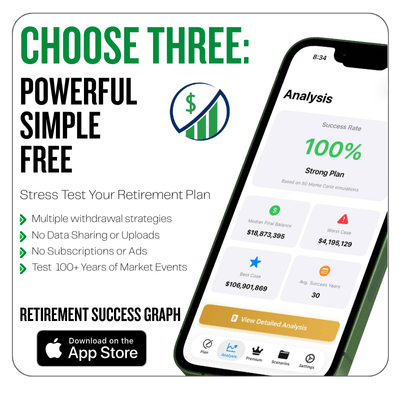
Retirement Success Graph ensures your retirement plan can support legacy goals alongside other priorities. Using Monte Carlo modeling, stress-test your portfolio against 100+ years of market data.
The free version runs 50 simulations showing success probability through age 95. Upgrade once for $4.99 to model charitable giving, compare scenarios, and run 10,000 projections.
Your data stays private on your device. Download from the App Store and build confidence in your legacy capacity.
Volunteering With Meaningful Impact
Not all volunteering creates equal legacy value. Some volunteer work is essentially unskilled labor that any warm body could perform. Other volunteer work leverages your specific expertise creating outsized impact.
Strategic volunteering:
- Board service: Nonprofits need strategic thinking, financial oversight, governance expertise—exactly what successful professionals provide.
- Pro-bono consulting: Apply career skills (marketing, finance, operations, HR) to organizations lacking resources for professional help.
- Skills training: Teach what you know—job interview skills, financial literacy, computer competency, professional development.
- Advocacy: Use your voice, networks, and influence advancing causes that matter.
The Harvard School of Public Health research on social engagement and longevity shows that volunteers providing skilled expertise report higher satisfaction and lower mortality risk than those performing unskilled tasks—suggesting that meaningful contribution matters more than simple activity.
Warning about volunteer overcommitment:
Many retirees—especially high-achievers—default to saying yes to every volunteer request. Within six months, they're overcommitted to multiple organizations, attending endless meetings, feeling exhausted rather than fulfilled.
Volunteering should enhance life, not recreate work stress with different branding. Be ruthlessly selective:
- One or two organizations maximum
- Clear time boundaries (X hours weekly, not unlimited availability)
- Roles leveraging expertise rather than filling gaps
- Causes genuinely mattering to you, not just needing volunteers
- Permission to quit if it stops serving you
Your professional career taught you to overcommit. Your retirement legacy requires learning to focus.
Intergenerational Connection: Bridging the Age Gap
One of the most meaningful legacy opportunities is bridging generational divides—connecting older and younger people who might not otherwise interact.
Why intergenerational connection matters:
Young people benefit from wisdom, perspective, and guidance that peers can't provide. Older people benefit from energy, fresh thinking, and purpose that isolation eliminates. Both sides grow from interaction.
Yet modern society increasingly segregates by age. Young people interact primarily with peers. Older people retreat into age-segregated communities. Both groups lose the richness that intergenerational connection provides.
Creating intergenerational legacy:
Grandparenting (when available): Not just babysitting but genuine engagement—teaching skills, sharing stories, providing stability and perspective.
Mentoring youth: Big Brothers Big Sisters, tutoring programs, youth sports coaching, arts programs—any structured way to invest in young people's development.
Reverse mentoring: Learning from younger people—technology, cultural trends, contemporary perspectives. This creates mutual respect rather than one-way teaching.
Multigenerational volunteering: Projects bringing different ages together around shared purpose—community gardens, environmental restoration, historical preservation.
Research from the National Institute on Aging shows that adults engaged in regular intergenerational interaction report better cognitive function, lower depression rates, and higher life satisfaction than age-segregated peers.
Family Legacy: What You Pass Down Beyond Wealth
Financial inheritance matters. But retirees overestimate its importance while underestimating other forms of inheritance:
Values inheritance: How you lived, what you prioritized, what you stood for. Your grandchildren might not remember specific conversations, but they'll internalize the values you demonstrated.
Story inheritance: Family history, personal experiences, lessons learned. Stories create identity and connection across generations—but only if told and recorded.
Skill inheritance: Practical capabilities you can teach—cooking, building, gardening, financial management, whatever you know that others can learn from.
Relationship inheritance: The quality of family bonds you help maintain. Families that stay connected across generations don't happen automatically—someone nurtures those connections.
The practical question: what specifically will your grandchildren remember about you? What will they say about you at your funeral? What stories will they tell their children?
If the answer is vague or uncomfortable, there's still time to shape that legacy intentionally.
Documenting Your Story: The Ethical Will
An ethical will—distinct from legal will distributing assets—documents your values, lessons learned, wishes for loved ones, personal history.
This can take multiple forms:
- Written document
- Video recordings
- Audio memoir
- Letters to specific family members
- Annotated photo collections
What to include:
Life lessons: What you've learned through success and failure that you want others to benefit from.
Values explanation: Why certain things mattered to you, how you hope your values influence future generations.
Family history: Stories that might otherwise be lost—how you met your spouse, what your parents were like, significant events that shaped you.
Gratitude and apology: Thanking specific people for impact they had. Apologizing for failures or hurts that remain unresolved.
Wishes for the future: Not controlling but expressing hopes for how loved ones will live and what they'll prioritize.
The power of ethical wills is their specificity. Not generic advice but personal wisdom. Not vague wishes but concrete hopes connected to your experience.
The Danger of Making Legacy Your Full-Time Job
Some retirees approach legacy building with the same intensity they brought to career—turning volunteering, mentoring, and family engagement into new forms of achievement-oriented striving.
This recreates the problems retirement was supposed to solve.
Legacy building should enhance life, not consume it. Should provide purpose without becoming source of stress. Should create meaning without demanding perfection.
Warning signs of unhealthy legacy focus:
- You're volunteering/mentoring to exhaustion
- You measure legacy numerically (people helped, hours contributed)
- You feel guilty when not actively "building legacy"
- You're pursuing impressive-sounding legacy over meaningful-to-you legacy
- You're sacrificing present joy for future remembrance
The Stanford Center on Longevity research on generativity emphasizes balance: contribution matters, but so does simply living well. Your legacy is not just what you accomplish—it's also how you spend your days, whether you experience joy, if you maintain relationships and health.
Sometimes the most important legacy work is being happy—showing that life remains rich and meaningful in later years.
Permission to Build Small Legacy
You're not going to cure cancer, solve climate change, or end poverty. Your legacy will be smaller, quieter, more personal than the grand narratives we celebrate.
That's not just okay—it's actually better.
The legacy that matters most is the one that touches specific people deeply rather than everyone superficially. The grandchild you mentor intensely. The friend you show up for consistently. The cause you advance incrementally. The person you happened to help at exactly the right moment.
Small legacy sustained beats grand legacy attempted.
You don't need your name on buildings. You need your influence in lives. Those are very different goals requiring very different approaches.
What You Want to Be Remembered For
Strip away professional achievement. Ignore job titles and career highlights. Remove wealth and assets from consideration.
What do you want to be remembered for?
Not what sounds impressive. Not what you should want. But what genuinely matters to you when you imagine people talking about you after you're gone.
For most people, the answer centers on relationships and character:
- "She was always there when we needed her"
- "He taught me how to think, not just what to think"
- "She made everyone feel seen and valued"
- "He lived his values even when it cost him"
- "She brought people together"
- "He never stopped learning and growing"
These legacies aren't built through grand gestures. They're built through daily choices, consistent presence, accumulated moments of integrity and generosity.
Your professional legacy is complete. It was necessary and valuable but ultimately temporary—replaced by whoever fills your role.
Your personal legacy is still being written. It's permanent—carried forward by people whose lives you touch and influence.
The question is whether you're writing it intentionally or letting it happen by default.
Ready to explore legacy beyond career? Listen to Episode 14 of Casual Mondays: "Legacy Building - Making Your Mark Beyond Career" wherever you get your podcasts.
Want to ensure your plan supports legacy goals? Download Retirement Success Graph to validate your financial foundation—free from the App Store.

The Cocktail Party Question That's About to Break Everyone