
The Cocktail Party Question That's About to Break Everyone

There’s a cocktail party question that’s been making people uncomfortable for generations: “So, what do you do?”
For most of my adult life, I had a ready answer. Market Director for a luxury hotel brand. Creative work, interesting clients, travel. The answer did heavy lifting—it told people I was relatively successful, educated, and (perhaps) interesting enough to keep talking to.
Then I retired in my early fifties.
And suddenly that question became a minefield.
“I’m retired” lands differently than “I run the so-and-so.” You can watch people recalibrate in real time. How old is he? Rich or laid off? Is this conversation still worth my time?
Here’s what I’ve learned since then: the discomfort I felt wasn’t about losing a job title. It was about having my entire sense of self tangled up in my economic output. And untangling that knot? It’s become the most important work of my post-career life.
But here’s the thing—I don’t think this is just a retirement problem anymore.
The Productivity Identity Trap
The American Psychological Association calls it a “master identity”—a role so central to your self-concept that it organizes how you think about everything else. For most professionals, that master identity is their career.
It makes sense. We spend 40+ years answering “what do you do?” with our job titles. We receive regular feedback loops at work—close a deal, get congratulations; solve a problem, earn recognition. Our calendars are full of meetings that make us feel needed. Our colleagues become our tribe.
Stanford’s Center on Longevity calls what happens when this ends “narrative disruption.” Your career told a story about where you came from, what you built, where you were headed. Without it, the book just stops mid-paragraph.
This isn’t weakness. It’s conditioning.
We’ve spent decades in an economy that taught us a simple equation: your value = your output. Productive people are successful. Successful people are worthy of respect, resources, relationships.
What happens when you can no longer produce?
The Retirement Preview
I’ve spent the last few years talking to early retirees—people in their 40s, 50s, and early 60s who left careers with their finances sorted but their identities in free fall. The patterns are remarkably consistent.
There’s the loss of structured time. Your calendar used to be full. Even if you complained about it, that structure provided forward momentum.
There’s the loss of social identity. Work gave you a community of people who understood your world and spoke your language.
And there’s the loss of what I call “valued affirmation”—that steady stream of feedback that told you, daily, that you mattered.
The University of Michigan’s Health and Retirement Study found that depression rates spike in the first year of retirement. Not because people miss spreadsheets. Because they’ve lost the primary mechanism through which they understood their own worth.
Here’s the uncomfortable truth: most retirees eventually figure this out. They build new identities, find new sources of purpose, learn to value themselves outside economic contribution. It takes a year or two of disorientation, but they adapt.
The question I keep asking myself is: what happens when this isn’t just a retirement problem?
The Bigger Disruption Coming
We’re watching AI capabilities compound faster than most predictions suggested. Within the next decade, a significant percentage of knowledge work—the work that currently provides identity, structure, and validation for millions of professionals—will be automated, augmented, or eliminated.
This isn’t science fiction. It’s already happening in legal research, financial analysis, content creation, customer service, software development. The jobs that gave people their cocktail party answers are being restructured in real time.
And here’s what concerns me: we have no cultural infrastructure for mass identity disruption.
Retirement, at least, comes with scripts. Gold watch. Congratulations. You earned this rest. Even if those scripts don’t actually help with the psychological transition, they exist.
What’s the script for “an AI does your job better than you do now”?
We’ve built an entire society around the assumption that human worth flows from economic contribution. Our social safety nets, our education systems, our dating profiles, our family dinners—all organized around the question of what you do.
When that foundation shifts, we’re going to need the skills that current retirees are learning the hard way.
Decoupling Worth from Output
The good news is that this skill can be developed. The research on retirement transitions actually provides a roadmap.
Recognize that your value was never really about productivity. This sounds obvious, but it requires genuine rewiring. The skills, values, and perspectives that made you good at your job? Those don’t disappear when the job does. A retired marketing executive I know realized what she actually loved was storytelling and persuasion—not marketing specifically. Those skills now serve nonprofit grant writing. Different context, same core self.
Build identity beyond work before you have to. People who cultivate non-work interests before retirement have significantly smoother transitions. The same will be true for those facing career disruption. If your entire sense of self is one role, you’re putting all your identity eggs in one basket.
Find purpose that isn’t contingent on payment. The Japanese concept of ikigai—your reason for being—isn’t about your job. It’s about the intersection of who you are, what you offer, and what the world needs. Research from Osaka University found that having a sense of purpose predicts well-being more than wealth, health status, or social connections.
Create structures that provide the validation work used to give you. This might be volunteering, creative projects, mentoring, community involvement. The point isn’t to replace work with more work. It’s to find alternative sources of the feedback and forward momentum that careers provided.
The Uncomfortable Question
Here’s what I think about during my morning walks, now that I no longer have a 7am leadership meeting to attend:
We’ve spent 200 years building an economic system that treats humans as production units. Our worth has been measured in output—hours worked, deals closed, products shipped.
What if that’s not just economically obsolete, but fundamentally wrong?
What if the retirees struggling to answer “what do you do?” are actually early arrivals at a question we’re all going to face?
Because here’s what I’ve found on the other side of that transition: I’m not less valuable now that I don’t produce revenue for a company. My relationships aren’t shallower. My days aren’t less meaningful. If anything, I’ve developed a richer, more grounded sense of who I am.
But it took work to get here. Work that our culture doesn’t prepare us for.
A Skill Worth Developing
Whether you’re approaching retirement, worried about AI disruption, or just tired of defining yourself by your job title, the practice is the same:
Learn to decouple your sense of worth from your economic productivity.
Not because productivity doesn’t matter. Not because work isn’t meaningful. But because tying your entire identity to something that external—something that can be taken away by market shifts, health changes, technological disruption, or simple aging—is a fragile way to build a self.
The retirees I talk to who’ve navigated this successfully aren’t the ones who found another job to replace their old one. They’re the ones who expanded their definition of what makes a life valuable.
That’s a skill we’re all going to need.
And maybe, just maybe, it’s a skill worth developing before we’re forced to.
Kevin Donahue is the host of the Casual Mondays Podcast, where he explores the daily realities of designing a purposeful life after your career ends. His book, Retirement Uncensored: What Advisors Are Afraid To Tell You, releases Q3 2026.
Author. Podcast Host. Pilgrim Backpacker. Aspiring Racer.
With a 25+ year track record of driving revenue, creating and repositioning brands, and developing leaders, Kevin Donahue is regarded as one of the elite marketing strategists and sales leaders in the luxury hospitality industry. He left the industry in his early fifties to prioritize intentional time as a husband and father, a pilgrim backpacker, an author, a digital developer, and a podcast host.
In his "retirement era", Kevin serves on the College of Business Advisory Council at Florida Gulf Coast University and is pursuing new passions, including auto racing and mobile app development.
For more on Kevin's active projects, please visit KevinDonahue.com and ChezMerStudios.com
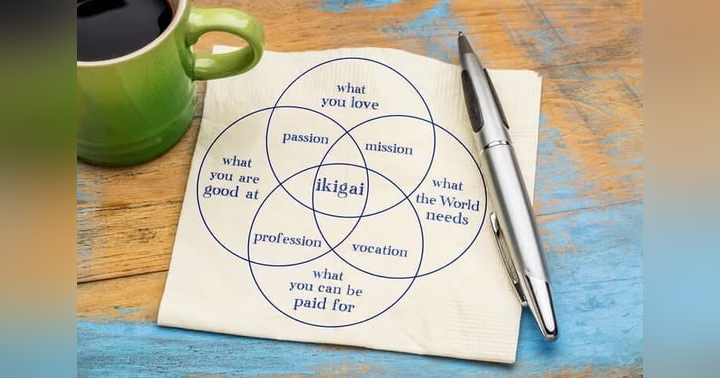
Your Reason for Being Beyond the Paycheck: Discovering Ikigai in Retirement